How Many Flowers Do I Need for the Perfect Wedding Bouquet?

Planning your wedding bouquet can feel overwhelming, especially when you're trying to balance your vision with your budget. One of the most common questions DIY brides ask is: "How many flowers do I actually need?" The answer depends on your bouquet size and style, but with the right formula, you can create a stunning arrangement that looks professionally designed.
At Fifty Flowers, we recommend using the FFLG method for floral design success. This proven approach ensures your bouquet has visual depth, texture, and professional appeal—even when you're crafting it yourself.

Understanding the FFLG Method
The FFLG method stands for Focal Flowers, Filler Flowers, Line Flowers, and Greenery. This four-element system creates balanced, beautiful bouquets that photograph well and feel substantial in your hands.
Focal Flowers serve as your bouquet's stars. These are typically larger blooms like roses, hydrangeas, or anemones that draw the eye and establish your color palette.
Filler Flowers add texture and volume without competing for attention. Popular choices include feverfew, limonium, or baby's breath—delicate blooms that fill gaps and create fullness.
Line Flowers provide structure and movement. Flowers like stock, snapdragons, or delphinium create elegant lines that guide the eye through your arrangement.
Greenery serves as the foundation, offering natural texture and helping other elements shine. Italian ruscus is a favorite choice for its durability and elegant appearance.
Most of our DIY wedding kits are carefully curated to include these four essential elements, taking the guesswork out of flower selection.

How Many Blooms for Your Perfect Bridal Bouquet?
For a standard bridal bouquet measuring 9-10 inches in diameter (about the size of a dinner plate), you'll need 25-30 total stems. This size feels substantial without being overwhelming and photographs beautifully.
Here's how to distribute your stems:
- 8-10 focal flowers (your main blooms)
- 8-10 filler flowers (for texture and volume)
- 4-6 line flowers (for structure)
- 5-6 greenery stems (for foundation and natural appeal)
This formula creates a bouquet that feels full and professionally designed while remaining comfortable to carry throughout your ceremony and reception.
Crafting Beautiful Bridesmaid Bouquets
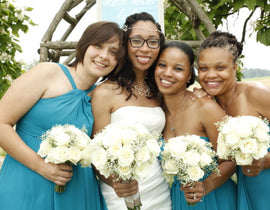
Bridesmaid bouquets should complement rather than compete with your bridal bouquet. A diameter of 6-8 inches works perfectly, requiring 15-20 total stems.
For bridesmaid arrangements, consider:
- 5-6 focal flowers
- 5-6 filler flowers
- 2-3 line flowers
- 3-4 greenery stems
This smaller size maintains visual harmony in your wedding party photos while keeping costs manageable.

Creating Your Own Wedding Flowers with Our DIY Kits
Creating professional-looking wedding flowers doesn't require years of floral design experience. Our DIY Flower Kits include pre-selected flowers that work beautifully together.
These kits are thoughtfully designed by experienced floral designers and come in a variety of stunning color palettes. Each kit features a beautifully curated selection of focal flowers, fillers, line flowers, and greenery, ensuring a perfect combination for any event, whether it’s a rustic barn wedding or an elegant garden ceremony.
The key to DIY success lies in preparation and having the right materials. When you receive flowers that have been professionally selected to work together, half the work is already done.
How to Assemble a Bouquet Using the Spiral Technique
The spiral technique is a simple yet effective method to create stunning, professional-looking bouquets. This technique not only enhances the arrangement's beauty but also ensures the bouquet feels balanced and is easy to hold. Here's how you can master it:
- Choose Your Flowers and Greenery: Start by selecting your focal flowers, filler flowers, line flowers, and greenery as outlined in the sections above.
- Prepare Your Stems: Remove any excess leaves and thorns to keep the stems clean and manageable.
- Start with a Focal Flower: Hold one focal flower in your non-dominant hand, slightly tilting it to rest diagonally.
- Add Flowers at an Angle: One by one, add each flower or greenery stem at a slight angle to the first stem. Rotate the bouquet slightly as you add each new piece, maintaining the spiral shape.
- Build Layers Around the Center: Continue layering your filler flowers, line flowers, and greenery, ensuring a uniform spiral pattern as you work.
- Secure the Bouquet: Once you've finished your arrangement, use floral tape, wire or a zip tie to secure it tightly at the base of the stems.
- Trim the Stems: Cut the stems evenly, leaving about 6-8 inches below the tape to make your bouquet comfortable to hold.
- Finish with Ribbon: Wrap the base with a ribbon for an elegant finishing touch, securing the ends with pins a knot or a bow.
For a detailed demonstration, check out this video tutorial to see the spiral technique in action! Practice makes perfect, so don’t be afraid to experiment with different flower combinations until you achieve your ideal look.
Our Floral Consultants Are Here to Help
If you're feeling uncertain about flower quantities or design choices, our floral consultants are here to help. We understand that every wedding is unique, and sometimes you need personalized guidance to bring your vision to life.
A consultation can help you determine the exact number of flowers needed for your specific bouquet size, style preferences, and wedding theme. We'll also provide tips on handling, arranging, and preserving your flowers so they look their best on your special day.
Whether you're confident in your DIY abilities or need a little extra support, we're committed to helping you create the wedding flowers of your dreams—without the professional florist price tag.
Ready to start planning your perfect bouquet? Book a consultation today, and let's figure out exactly what you need to make your floral dreams come true.
ABOUT THE AUTHOR


