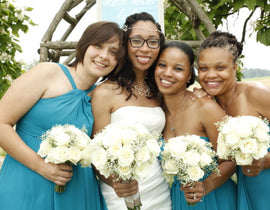
How to Make DIY Wedding Flowers Look Professional

Designing your own wedding flowers is one of the most rewarding ways to personalize your big day. Not only can DIY wedding flowers help you stay within your budget, but they also give you the freedom to create floral arrangements that truly reflect your style.
One of the most common questions we hear from DIY brides is, "How do I make my flowers look like they were designed by a professional florist?"
The good news is that you don't need years of floral design experience to create stunning bouquets, centerpieces, or ceremony flowers. Professional-looking arrangements come down to choosing quality flowers, understanding a few simple design principles, and creating a thoughtful plan before you begin arranging.
Whether you're making your own bridal bouquet or decorating an entire venue, these expert tips will help you create wedding flowers that look polished, intentional, and beautifully cohesive.
Start with High-Quality Flowers
Every beautiful arrangement starts with beautiful flowers.
Using premium wholesale flowers gives you access to the same fresh blooms many professional florists use for weddings and special events. Fresh, high-quality flowers open beautifully, last longer throughout your celebration, and create fuller, healthier-looking arrangements.
As you begin planning your wedding flowers, explore the FiftyFlowers Wholesale Flower Collection to discover everything from timeless roses and romantic ranunculus to elegant hydrangeas, orchids, specialty blooms, and lush greenery. Starting with quality flowers gives your arrangements the best possible foundation.
Use the FFLG Method: The Secret to Professional-Looking Arrangements
If you've ever admired a wedding bouquet and wondered why it looked so balanced and effortless, chances are the designer followed a simple floral design principle known as FFLG—Focal Flowers, Filler Flowers, Line Flowers, and Greenery.
Rather than choosing flowers randomly, professional designers build arrangements by combining these four elements. This creates depth, movement, texture, and balance while making flower selection much easier for DIY brides.
Focal Flowers
Focal flowers are the stars of your arrangement. They're the blooms that immediately catch your eye and establish the overall style of your design.
Popular focal flowers include roses, garden roses, peonies, dahlias, ranunculus, hydrangeas, orchids, and protea. These larger blooms provide the foundation of your bouquet or centerpiece and create the biggest visual impact.
When selecting focal flowers, think about the overall feeling you want your wedding flowers to create. Soft and romantic? Modern and elegant? Colorful and playful? Your focal flowers help tell that story.

Filler Flowers
Filler flowers create fullness and connect your focal blooms together.
Rather than stealing the spotlight, they soften the arrangement and help every flower transition naturally into the next. Spray roses, carnations, chrysanthemums, wax flower, limonium, asters, and baby's breath are all excellent filler flowers depending on your desired style.
Filler flowers are often what make bouquets feel abundant without dramatically increasing the cost of your arrangements.

Line Flowers
Line flowers bring movement and height to your designs.
Flowers like snapdragons, stock, delphinium, bells of Ireland, larkspur, and veronica naturally guide the eye through an arrangement while adding the organic, garden-inspired look that's become so popular in modern weddings.
These flowers help break up rounded flower shapes and prevent arrangements from feeling too uniform.

Greenery
Greenery is much more than a finishing touch.
It frames your flowers, softens transitions, and adds texture throughout the arrangement. Italian ruscus, silver dollar eucalyptus, seeded eucalyptus, salal, leather leaf, and pittosporum all create beautiful movement while allowing focal flowers to shine.
Thoughtfully placed greenery helps bouquets feel lush, airy, and naturally elegant.
When you combine focal flowers, filler flowers, line flowers, and greenery, you'll begin creating arrangements with the same balance and dimension seen in professionally designed wedding florals.

Choose a Cohesive Color Palette
One of the easiest ways to elevate your DIY flowers is by limiting your color palette.
Rather than choosing every flower you love, select two or three primary colors and repeat them throughout your bouquets, centerpieces, ceremony flowers, and reception décor.
A cohesive palette instantly creates harmony and makes your floral designs feel intentional.
Whether you're dreaming of timeless whites, romantic blush tones, bold summer colors, or warm autumn hues, consistency is what creates a polished overall look.
Layer Flowers Instead of Arranging Them in Rows
Professional floral arrangements rarely place every flower at the same height.
Instead, designers create movement by layering flowers throughout the arrangement. Begin with your focal flowers, then weave in fillers, line flowers, and greenery while varying stem lengths slightly.
This creates natural depth and allows every flower to be seen rather than hidden behind another bloom.
The result is an arrangement that feels organic, abundant, and professionally designed.
Don't Overfill Your Arrangements
One of the biggest misconceptions about luxury floral design is that more flowers always create better arrangements.
In reality, giving individual blooms room to breathe often creates a much more elegant appearance.
Negative space allows each flower to showcase its natural beauty while giving bouquets and centerpieces a lighter, more modern feel.
Sometimes less really is more.
Practice Before Your Wedding
If this is your first time designing wedding flowers, give yourself the gift of practice.
Ordering a small batch of flowers a few weeks before your wedding allows you to experiment with bouquet shapes, color combinations, and flower placement before your actual wedding week.
You'll gain confidence, learn how your chosen flowers behave, and discover small adjustments that will make arranging easier on the big day.
Build Your Flower Recipe Before You Order
One of the best-kept secrets to successful DIY wedding flowers isn't arranging—it's planning.
Before you place your flower order, create a flower recipe for your wedding. Think of it as the blueprint for your floral designs. A flower recipe outlines the focal flowers, filler flowers, line flowers, and greenery you'll use throughout your bouquets, centerpieces, ceremony décor, and installations.
For example, your recipe might include:
-
Two focal flowers, such as roses and ranunculus
-
Two filler flowers, like spray roses and wax flower
-
One line flower, such as snapdragons
-
Two varieties of greenery, like Italian ruscus and seeded eucalyptus
Having a recipe before ordering helps you determine how many stems you'll need while ensuring every arrangement feels cohesive from the ceremony to the reception.
Instead of guessing which flowers work well together, you'll have a clear plan that makes ordering and designing much less stressful.
Need Help Building Your Flower Recipe?
One of the biggest questions DIY brides ask is, "How many flowers do I actually need?"
The answer depends on the size of your wedding, the types of arrangements you're creating, and the overall style you're envisioning.
If you're feeling unsure, you don't have to figure it out on your own.
Our floral experts can help you create a customized flower recipe based on your color palette, wedding style, budget, and floral goals. During a consultation, we'll help you choose flowers that complement one another, estimate the quantities you'll need, and recommend blooms that fit your vision and comfort level.
Whether you're creating a handful of centerpieces or decorating an entire venue, having a personalized flower recipe takes the guesswork out of ordering wholesale flowers and gives you the confidence to bring your vision to life.
If you're ready to start planning your DIY wedding flowers, consider scheduling a consultation with one of our floral experts. Together, we'll create a flower recipe that's uniquely yours and help you feel prepared every step of the way.
Conclusion
Creating beautiful DIY wedding flowers isn't about having years of floral design experience—it's about having a thoughtful plan, choosing quality flowers, and understanding the building blocks of great design.
By following the FFLG method, selecting a cohesive color palette, practicing your arrangements, and creating a personalized flower recipe, you can design bouquets, centerpieces, and floral installations that look professionally crafted while reflecting your own unique style.
Ready to start planning your wedding flowers? Explore the FiftyFlowers Wholesale Flower Collection to discover premium blooms for every season, style, and color palette. And if you're not sure where to begin, schedule a consultation with one of our floral experts. We'll help you build a custom flower recipe that takes the guesswork out of DIY and gives you the confidence to create wedding flowers you'll never forget.
ABOUT THE AUTHOR


