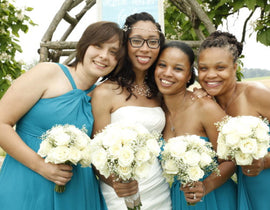
How Photography Filters Change Your Flower Colors (And Why It Matters for Your Wedding)

You've spent hours scrolling Pinterest, saving gorgeous wedding flower photos that perfectly match your color palette. But when you meet with your florist and show them your inspiration board, they gently break the news: "These flowers don't actually look like this in real life."
Sound familiar? You're not alone. Photography filters have revolutionized how we see and share beautiful moments, but they can also create unrealistic expectations when it comes to wedding planning—especially with flowers.
Let's explore how filters affect flower photography and what you need to know to make informed decisions for your big day.
The Filter Effect on Flower Colors
Photography filters work by adjusting various elements like saturation, contrast, warmth, and hue. While these adjustments can create stunning images, they often dramatically alter how flowers appear compared to their natural state.

Saturation boosts make colors appear more vibrant and intense. That soft pink rose might look like a bold magenta, while pale yellow sunflowers could appear golden orange.

Warm filters add yellow and orange tones, making white flowers look cream or ivory, and cool-toned purples appear more red or pink.

Cool filters do the opposite, adding blue undertones that can make warm flowers look muted or change their color family entirely.

Contrast adjustments can make light flowers like dahlias appear brighter and dark flowers deeper, creating color variations that don't exist naturally.

Why This Matters for Your Wedding Planning
Understanding filter effects can save you from disappointment and help you make better decisions:
Budget planning becomes more accurate when you know what flowers actually look like. You might discover that a "budget-friendly" flower you loved in a photo is actually an expensive variety that's been heavily filtered.
Color coordination works better when you're working with realistic expectations. Your carefully planned color palette might clash if you're basing it on filtered photos rather than actual flower colors.
Seasonal availability becomes clearer when you understand what you're actually looking for, rather than chasing a filtered version that might not exist.
Tips for DIY Brides
Create a reality check board alongside your Pinterest inspiration. Search for "no filter" or "natural light" photos of your chosen flowers to see how they actually appear.
Visit flower markets or local florists to see blooms in person. Take photos with your phone's camera (without filters) to document the true colors.
Ask your florist for honest feedback about your inspiration photos. Most florists can identify when a photo has been heavily filtered and suggest realistic alternatives.
Consider the lighting at your venue. Flowers that look perfect in filtered outdoor photos might appear different under indoor lighting or at different times of day.
Document your own flowers honestly. When photographing your DIY arrangements or final wedding flowers, take some unfiltered shots to remember their true beauty.
Finding Your Perfect Flowers
Don't let filter effects discourage you from using social media for inspiration. Instead, use these platforms as a starting point, then dig deeper to understand what you're actually seeing.
Look for photographers who specialize in natural, unfiltered wedding photography. Their portfolios will give you a more realistic idea of how different flowers photograph.
When saving inspiration photos, make notes about what specifically draws you to each image—is it the color, the texture, the arrangement style, or the overall mood? This helps you communicate your vision more effectively to your florist.
Creating Authentic Beauty
The goal isn't to avoid filters entirely or dismiss beautiful photography. Instead, it's about understanding the difference between digital inspiration and natural reality so you can make informed choices for your wedding.
Your flowers don't need heavy filters to be beautiful. Natural blooms have their own authentic beauty—subtle color variations, interesting textures, and seasonal characteristics that make them special.
When you understand how photography filters affect flower colors, you can approach your wedding planning with realistic expectations and create arrangements that are genuinely stunning, both in person and in photos.
Remember, your wedding day deserves flowers that look as beautiful in real life as they do in pictures. By understanding the filter effect, you're one step closer to creating the perfect floral vision for your special day.
ABOUT THE AUTHOR


